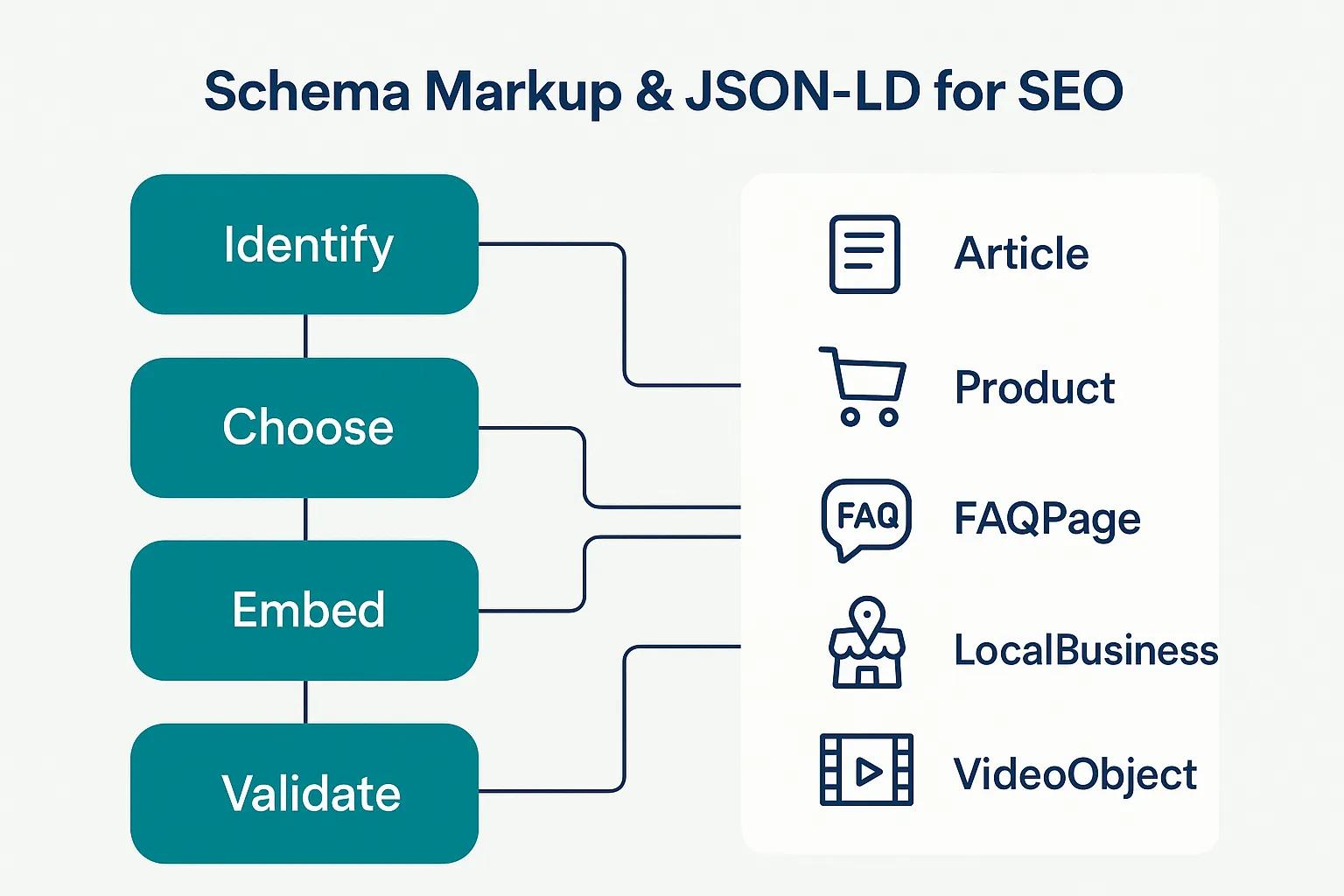

Schema Types That Matter for SEO Glory

This rundown shows you the schema types that pack the biggest punch for your website’s SEO. We’ve paired each one with its key features and where you’d typically use it, so you can see exactly how they’ll supercharge your content game.

Schema TypeKey AttributeTypical Application
ArticleheadlineYour blog posts, news pieces
ProductoffersOnline shop items, review roundups
FAQPagemainEntityThose handy Q&A sections
LocalBusinessaddress/geoYour shop's location page, service areas
VideoObjectcontentUrlEmbedded clips, how-tos, trailers

Get a grip on these schema types, and you’ll see your website climb the search ranks, snagging more clicks and keeping visitors hooked. Getting your structured data dialed in is a non-negotiable step for making your content sing to search engines.

Level Up Your SEO: Schema Markup & JSON-LD Explained

Your Blueprint for Structured Data Success

Getting structured data right is your golden ticket to better search visibility and more clicks. Here’s the game plan for weaving schema markup and JSON-LD into your site:

  • Pinpoint Your Content – Figure out what kind of stuff you're putting out there – articles, products, events? This helps you pick the right schema.
  • Pick the Perfect Schema – Head over to schema.org and find the best fit. Think Article for your blog posts or Product for your shop pages. Make sure it’s a match!
  • Weave in JSON-LD – Pop these scripts into your HTML's or . They’re like a clear map for search engines, showing them what’s what.
  • Test Your Code – Use tools like Google's Rich Results Test to make sure your structured data is flawless and search engines can actually read it.
  • Watch Your Wins – Keep an eye on how your site performs in search. See how structured data is boosting your visibility and click-throughs.
  • Keep It Fresh – Update your structured data whenever you add new content or tweak existing pages. Stay current, stay seen.

Turn your web pages into data goldmines that search engines can’t get enough of. Structured data is your secret weapon, unlocking those fancy display features and sending your click-through rates soaring. If your site – whether it’s a carefully curated collection of films like thebrothersbloom.com or any other corner of the web – isn’t using schema markup, you’re leaving serious opportunities on the table. Imagine missing out on those eye-catching rich snippets, informative knowledge panels, and those coveted video previews! This guide is your compass. We’ll dive deep into what structured data really means for SEO, highlight the must-have schema types, walk you through practical JSON-LD implementation, show you how to put your markup to the test, explore advanced dynamic markup tricks, and reveal the tangible wins for both users and your search visibility. Every section is packed with actionable advice and real-world examples, all designed to elevate your site’s data structure and SEO game from the first line of code to the top of the search results.

What's the Scoop on Structured Data and Why It's an SEO Must-Have?

Structured data is basically a universal language that helps search engines get a handle on your webpage content. Think of it as giving search engines a super-clear, no-fluff summary so they can show your info in rich results and power those smart semantic search features. By using schema.org vocabulary with JSON-LD, you’re explicitly telling search engines about entities and how they connect – like a movie’s director, its release date, or even where to find its trailer. This clarity lets Google whip up those star ratings, handy knowledge panels, and engaging video carousels. It’s a direct line of communication that boosts your visibility, helps voice assistants, and pulls in users who want precise answers. Getting these basics down is your first step to picking the right schema types and mastering their implementation.

Why All the Fuss About Structured Data in SEO?

In the SEO world, structured data means adding special markup to your webpage elements with tags that search engines can actually read. These tags come from a shared language, most often schema.org. This tagging process adds layers of meaning – telling search engines if your content is a product, an event, or a video – so they can easily understand it and display it as rich snippets. The real magic happens with JSON-LD scripts that wrap key details, like a movie poster’s “image” property, in a data structure search engines instantly recognize. The result? Content that’s properly marked up is way more likely to trigger those sought-after enhanced SERP features and boost your organic click-through rates by guiding users straight to what they’re looking for.

Schema.org: Enhancing Search Engine Results and Search Engine Optimization

1. This article describes the main characteristics of Schema.org, the vocabulary developed in 2011 by Google, Bing, Yahoo!, and Yandex to markup webpage content, thereby making data recognizable and understandable to search engines. We present the primary application of Schema.org today, which is to enrich the information about a webpage displayed in a search engine’s results. We then examine the fundamental principles of Schema.org’s structure (classes, properties, values, etc.) and the coding formats it accepts. Furthermore, we explain how to markup webpage content with Schema.org and describe who currently uses, maintains, and develops this vocabulary. Finally, we briefly assess the advantages of using Schema.org, as well as its potential applications in improving searches and search engine results (e.g., greater accuracy, enhanced functionalities); the development of the semantic web; and the area of website ranking (search engine optimization, SEO).

2. The main characteristics of Schema.org, the vocabulary created in 2011 by Google, Bing, Yahoo!, and Yandex to markup webpage content, making its data recognizable and understandable to search engines, are described. Its primary current application, the enrichment of information displayed by search engines for each webpage in their results, is presented, along with the foundations of its structure (entities, properties, values, etc.) and the coding formats it accepts. It also explains how to markup webpage content with Schema.org, who currently uses this vocabulary, and who maintains and develops it. Finally, the advisability of using Schema.org is briefly evaluated, as well as the potential applications of this vocabulary in the improvement of searches and search engine results (more precision, more functionalities, etc.), in the development of the semantic web, and even in the ranking of webpages in search engines.

Schema. org: An enhanced display of search engine results and much more, A Sulé, 2015

How Does Structured Data Give Your Search Visibility and Click-Through Rates a Boost?

Structured data is your secret weapon for boosting search visibility, making your content eligible for those coveted rich snippets. These snippets snag prime real estate in search results, dishing out extra details like star ratings, images, or event dates. The magic happens when search engines connect your tagged properties – think aggregateRating or VideoObject – with their rich result templates. The real-world payoff? A noticeable bump in organic click-through rates, often between 5–15 percent after you get it implemented. These jazzed-up listings don’t just look good; they build trust, invite interaction, and clearly signal that your content is exactly what searchers are hunting for, ultimately beefing up your site’s authority.

What Are Rich Snippets, Knowledge Panels, and Semantic Search?
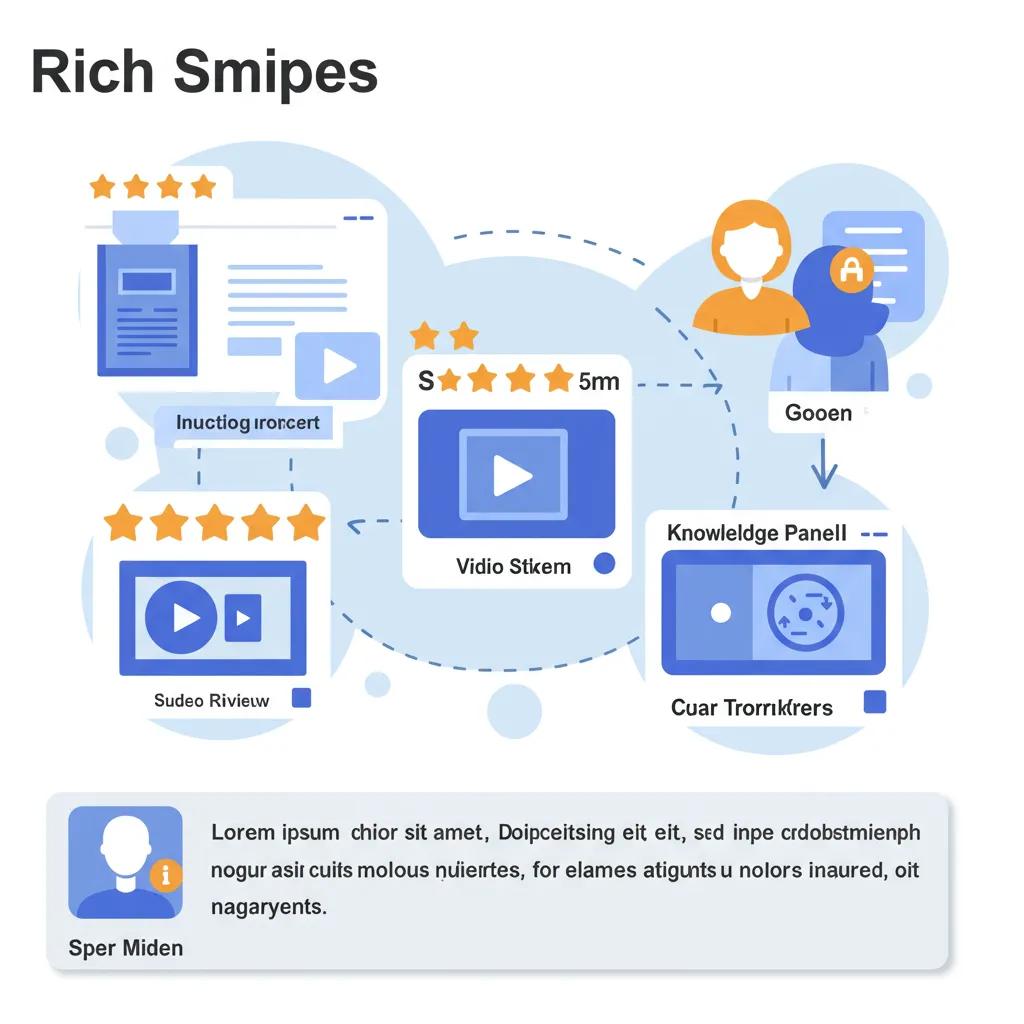
Rich snippets are those attention-grabbing, enhanced result formats you see in SERPs – like those five-star reviews, step-by-step recipe guides, or video thumbnails – all thanks to structured data. Knowledge panels pop up right next to search results, offering a neat summary of entities like movies or organizations, pulling info from your schema markup to show cast lists, release dates, or official logos. Semantic search takes it even further, using these annotations to understand what users are *really* asking for, based on intent and context, not just keywords. By structuring your data around key entities – whether it’s an Article, a LocalBusiness, or a VideoObject – you’re aligning your content with the future of search and getting ready for the rise of voice queries.

In a nutshell, rich snippets and knowledge panels serve up visually appealing, context-rich results that showcase your site’s expertise and entice clicks, setting the stage for picking the perfect schema types.

How Does Structured Data Help You Win at Voice Search?

Structured data is a total game-changer for voice search, giving voice assistants the precise context they need to nail those conversational queries. When your JSON-LD markup clearly defines properties like “name,” “description,” and “speakable” sections within an article or podcast, voice assistants can grab and vocalize your content flawlessly. This markup cuts through the noise by providing machine-readable cues for question-and-answer formats, ensuring your content is the one heard in spoken answers. The payoff? You expand your reach through smart speakers and mobile voice assistants, capturing an audience that relies on natural language for instant info.

Which Structured Data Types Are Your SEO Must-Haves?

While schema.org offers a whole universe of structured data types, a select few deliver the most significant SEO bang for your buck for most websites. Essential types include Article for your blog posts and news, Product for e-commerce pages, FAQPage for those common questions, LocalBusiness for physical locations, and VideoObject for all your embedded media. These categories directly translate into feature-rich SERP enhancements like carousels, FAQ results, and local packs. Don’t sleep on specialized types like ClaimReview for fact-checking and Speakable for voice optimization – they can help you stand out and cater to emerging user needs.

What Are the Top Schema.org Types for SEO?

Here’s a quick rundown of the most popular schema.org types, what they highlight, and where they shine:

Schema TypeKey AttributeTypical Application
ArticleheadlineBlog posts, news articles
ProductoffersE-commerce listings, review aggregations
FAQPagemainEntityFrequently asked questions sections
LocalBusinessaddress/geoStore location pages, service area definitions
VideoObjectcontentUrlEmbedded trailers, tutorial videos

Mastering these five types will build a robust, SEO-focused data structure, paving the way for rich snippets, prominent site links, and engaging multimedia features in search results.

How Do Specialized Schemas Like ClaimReview and Speakable Elevate Your SEO?

ClaimReview and Speakable schemas are your secret weapons for fact-checking and voice-friendly content, respectively. ClaimReview adds crucial properties like “claimReviewed,” “rating,” and “author,” enabling your content to appear in specialized review rich results. Speakable identifies specific text segments optimized for voice assistants to read aloud, making your content more accessible via smart speakers. By implementing these niche types, you position your site at the cutting edge of verification-focused search features and conversational interfaces, building trust and relevance in both visual and auditory search experiences.

Frequently Asked Questions

1. What is the difference between structured data and regular HTML?

Structured data is a specific format that helps search engines understand the content of your webpage more effectively. While regular HTML provides the basic structure and content of a page, structured data uses standardized vocabularies, like schema.org, to annotate that content with additional context. This allows search engines to display rich snippets and other enhanced features in search results, improving visibility and user engagement. In essence, structured data acts as a communication tool between your site and search engines, enhancing the way your content is interpreted.

2. How can structured data improve user experience on my website?

Structured data enhances user experience by providing clear, concise information directly in search results. When implemented correctly, it can lead to rich snippets that display additional details, such as ratings, prices, or event times, right in the search results. This helps users quickly find the information they need without having to click through multiple pages. Additionally, structured data can improve navigation and accessibility on your site, making it easier for users to locate relevant content, ultimately leading to higher satisfaction and engagement.

3. Are there any risks associated with using structured data?

While structured data can significantly enhance your SEO efforts, there are some risks to consider. Incorrect implementation or using the wrong schema types can lead to errors in search engines, potentially harming your visibility. Additionally, if your structured data does not accurately reflect your content, it may mislead users, resulting in high bounce rates. To mitigate these risks, always validate your structured data using tools like Google’s Rich Results Test and ensure that it aligns with the actual content on your pages.

4. Can structured data help with mobile SEO?

Yes, structured data can significantly benefit mobile SEO. As mobile search continues to grow, providing clear and concise information through structured data helps search engines deliver relevant results to mobile users. Rich snippets, which often appear in mobile search results, can enhance visibility and click-through rates on mobile devices. By optimizing your structured data for mobile, you ensure that your content is easily accessible and engaging for users on the go, ultimately improving their experience and your site’s performance in mobile search results.

5. How do I choose the right schema type for my content?

Choosing the right schema type for your content involves understanding the nature of your content and its purpose. Start by identifying the primary focus of your page—whether it’s an article, product, event, or local business. Then, visit schema.org to explore the available schema types and their attributes. Select the schema that best matches your content’s characteristics and goals. Properly aligning your content with the appropriate schema type ensures that search engines can accurately interpret and display your information, enhancing your visibility in search results.

6. What role does JSON-LD play in structured data implementation?

JSON-LD (JavaScript Object Notation for Linked Data) is a popular format for implementing structured data on web pages. It allows you to embed structured data in a way that is easy for search engines to read and understand. JSON-LD is typically placed within the

1. What tools can I use to create and validate structured data?

There are several tools available to help you create and validate structured data. Google’s Structured Data Markup Helper is a user-friendly option that guides you through the process of adding schema markup to your site. Once you’ve implemented your markup, you can use the Rich Results Test or the Schema Markup Validator to check for errors and ensure that your structured data is correctly formatted. These tools help you confirm that search engines can read and interpret your structured data effectively.

2. How often should I update my structured data?

It’s essential to update your structured data whenever you make changes to your content or add new pages. Regular updates ensure that search engines have the most accurate and relevant information about your site. Additionally, if you notice changes in your site’s performance or if new schema types become available, revisiting your structured data can help you stay competitive. A good practice is to review your structured data at least quarterly or whenever significant updates occur on your website.

3. Can structured data impact my website's ranking on search engines?

While structured data itself does not directly influence your website’s ranking, it can significantly enhance your visibility in search results. By making your content eligible for rich snippets and other enhanced features, structured data can improve your click-through rates, which is a positive ranking signal. Additionally, better visibility can lead to increased traffic and user engagement, indirectly contributing to improved rankings over time. Therefore, implementing structured data is a valuable strategy for SEO success.

4. What are the common mistakes to avoid when implementing structured data?

Common mistakes when implementing structured data include using incorrect schema types, failing to validate your markup, and not keeping your data updated. It’s crucial to select the appropriate schema types that match your content accurately. Additionally, always test your structured data with validation tools to catch errors before they affect your site’s performance. Lastly, ensure that your structured data reflects any changes in your content to maintain accuracy and relevance for search engines.

5. How does structured data benefit local businesses specifically?

Structured data offers significant advantages for local businesses by enhancing their visibility in local search results. By using the LocalBusiness schema, businesses can provide essential information such as their address, phone number, and operating hours, making it easier for potential customers to find them. This structured data can lead to rich snippets that display this information prominently in search results, increasing the likelihood of attracting local customers and driving foot traffic to physical locations.

6. Is there a limit to how much structured data I can implement on a page?

While there is no strict limit to the amount of structured data you can implement on a page, it’s essential to use it judiciously. Overloading a page with excessive markup can lead to confusion for search engines and may result in errors during validation. It’s best to focus on the most relevant schema types that accurately represent your content. Prioritize quality over quantity to ensure that your structured data is effective and enhances your site’s visibility without overwhelming search engines.

7. How can I track the performance of my structured data?

To track the performance of your structured data, you can use Google Search Console. This tool provides insights into how your structured data is performing in search results, including any errors or warnings that may need addressing. Additionally, you can monitor your site’s click-through rates and organic traffic to see if there are improvements after implementing structured data. Regularly reviewing these metrics will help you understand the impact of your structured data on your overall SEO performance.

Wrap Up

Implementing structured data through schema markup and JSON-LD is your golden ticket to boosting website visibility and click-through rates, making your content irresistible to search engines. By clearly defining entities and their connections, you unlock the potential for rich snippets and knowledge panels that grab user attention. Don’t miss out on the chance to elevate your SEO strategy – start integrating structured data today. Dive into our resources to discover the best practices and tools for making it happen.

Wrap Up

Implementing structured data through schema markup and JSON-LD is essential for boosting your website’s visibility and enhancing click-through rates. By clearly defining entities and their relationships, you can unlock rich snippets and knowledge panels that significantly improve user engagement. Don’t let your site miss out on these valuable SEO benefits – start integrating structured data today. Explore our resources to discover best practices and tools for effective implementation.

Wrap Up

Implementing structured data through schema markup and JSON-LD is crucial for enhancing your website’s visibility and driving higher click-through rates. By clearly defining entities and their relationships, you can unlock rich snippets and knowledge panels that significantly boost user engagement. Don’t miss the chance to elevate your SEO strategy – begin integrating structured data today. Explore our resources to learn more about best practices and tools for effective implementation.

Wrap Up

Implementing structured data through schema markup and JSON-LD is vital for enhancing your website’s visibility and driving higher click-through rates. By clearly defining entities and their relationships, you can unlock rich snippets and knowledge panels that significantly boost user engagement. Don’t miss the opportunity to elevate your SEO strategy – start integrating structured data today. Explore our resources to learn more about best practices and tools for effective implementation.