
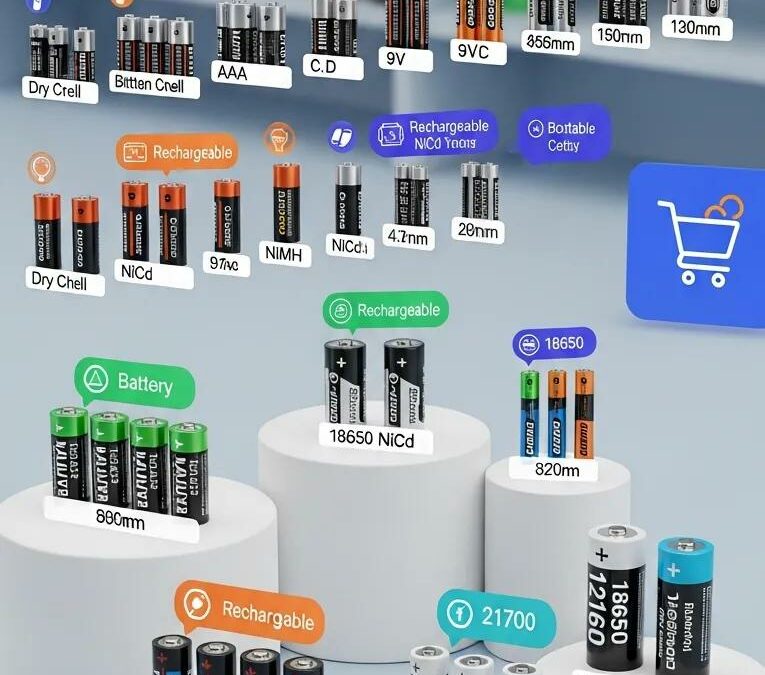
How Sogo Home Store Dominated Pakistan’s Online Battery Market: A Category Growth Case Study
This case study examines how a focused mix of product assortment, search visibility, pricing transparency, and a friction-reducing customer experience accelerated category growth for an e-commerce seller in Pakistan. It defines the objective (win online battery market share), explains the mechanisms used (product portfolio expansion, SEO and content clusters, competitive pricing and delivery options, and UX improvements), and previews the main measurable outcomes readers will learn to reproduce. Readers will get a concise executive summary, a data-driven market context showing demand drivers for batteries in Pakistan, a strategy breakdown with tactical SEO and product steps, performance metrics that validate the approach, and actionable takeaways to replicate growth. Throughout the article we reference industry-relevant terminology—batteries, energy storage, lithium-ion and rechargeable batteries, solar products, UPS systems—and practical buyer queries such as where to buy batteries online in Pakistan and how to compare battery prices. The guidance is designed for e-commerce managers, category leads, and content strategists seeking replicable tactics for online battery category growth.
Indeed, research confirms that a tailored digital marketing approach, including robust SEO and content strategies, is crucial for e-commerce success and sales optimization within the Pakistani market.
Digital Marketing & SEO for E-commerce Sales in Pakistan
In the digital age, businesses in Pakistan are increasingly leveraging digital marketing strategies to enhance their sales performance and customer reach. This research explores the relationship between digital marketing practices and sales optimization from a Pakistan-specific perspective. The study uses a mixed-method approach, combining quantitative survey data from 300 marketing professionals and qualitative interviews with 15 experts from the retail and e-commerce sectors. Results indicate that tools such as social media marketing, SEO, content marketing, and email campaigns significantly impact sales optimization when tailored to local market needs. The research further highlights how data analytics and consumer behaviour tracking enhance targeting accuracy and customer engagement. IMPACT OF DIGITAL MARKETING ON SALES OPTIMIZATION: PAKISTAN’S PERSPECTIVE, 2024
Executive Summary
This executive summary defines the opportunity: rising demand for energy storage and backup solutions in Pakistan created a clear commercial gap for online specialists to serve informed buyers. The mechanism combined assortment breadth, content-led discovery, clear pricing signals, and logistics/payment conveniences to capture consideration and purchase intent. The result was accelerated organic visibility and improved conversion for battery-related queries by aligning product pages, topic clusters, and on-site comparison features with buyer intent. The summary below highlights the main strategic pillars and top-line outcomes to orient executives before diving into tactics and metrics that follow.
Overview
Sogo Home Store approached the online battery opportunity by aligning assortment and messaging to the load-shedding and solar adoption trends that drive battery purchases in Pakistan. The approach combined product expansion across battery families with targeted SEO and buyer-focused content to improve discovery for keywords like batteries in pakistan and rechargeable batteries online. Through category-focused pages and buyer guides the team reduced friction for comparison shoppers while increasing search visibility. This overview sets up detailed strategy sections that explain product choices, content architecture, pricing tactics, and UX improvements that together generated measurable uplift.
Key Highlights
Key highlights summarize the milestones that matter for replication and stakeholder reporting. First, the company prioritized a one-window solution for consumers to compare and purchase batteries and related accessories. Second, the platform implemented price-transparency features and checkout/payment options that match local expectations. Third, sourcing expansion diversified product origins to improve assortment depth in lithium and lead-acid segments. These highlights demonstrate the coordinated playbook across product, pricing, and experience that drove category momentum and set the stage for metric-level validation in later sections.
Results at a Glance
A concise snapshot of outcomes frames the business case before metrics are unpacked: improved organic visibility for battery queries, higher on-site engagement on battery category pages, and measurable conversion uplift after pricing and delivery optimizations. These results link traffic growth to conversion improvements and revenue contribution, validating the integrated strategy. The following sections will break down each input and show how to replicate the same causal chain in other e-commerce contexts.
Market Context
Market context defines why the online battery opportunity existed and what macro trends made it attractive for a focused e-commerce strategy. The Pakistan battery market in the current timeframe shows heightened consumer demand driven by load-shedding, solar adoption, and broader reliance on UPS and backup systems. These demand drivers increase search volume for battery solutions—everything from small dry batteries to larger lithium options for solar and UPS—creating consistent organic opportunity for well-optimized stores. Understanding these dynamics clarifies where to invest: product pages for solar-compatible batteries, hub content for battery selection, and comparison primitives for price-sensitive buyers.
Despite significant internet penetration, the e-commerce landscape in Pakistan still holds untapped potential, presenting both unique challenges and substantial opportunities for online businesses.
E-commerce Opportunities & Challenges in Pakistan
Pakistan, with a population of 116 million and over 50% of its populace having access to the internet (broadband, 3G, and 4G), presents significant opportunities for e-commerce. Nevertheless, Pakistan has yet to fully harness its e-commerce potential. According to the 2019 business to e-commerce index published by UNCTAD, only 5% of internet users and 1% of the total population in Pakistan engaged in online shopping in 2017. This figure is significantly lower in comparison to other regional and developing nation Challenges and opportunities for E-commerce in Pakistan, 2024
Pakistan Battery Market Growth and Demand Drivers
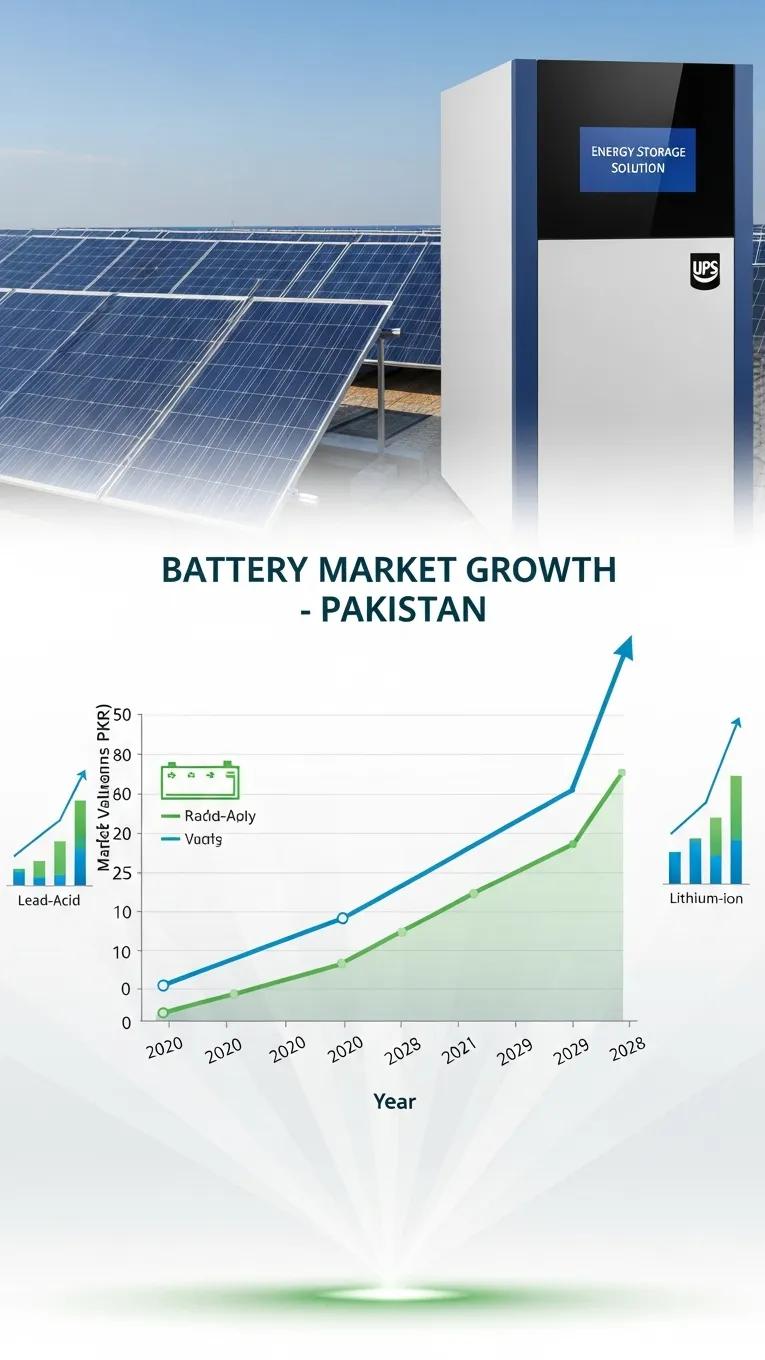
The Pakistan market exhibits segment divergence: secondary batteries and lead-acid units remain dominant for traditional backup and automotive segments, while lithium-ion adoption is rising for solar storage and higher cycle-life applications. Driving forces include consumer solar installations, persistent load-shedding that elevates backup requirements, and increased interest in rechargeable batteries online. Constraints such as import duties and limited local manufacturing affect lead times and pricing, which in turn make transparent price comparison and reliable delivery vital for online sellers. This market profile informs SKU selection and inventory prioritization for sellers targeting buy batteries pakistan queries.
Sogo’s Market Entry and Positioning
Sogo Home Store offers a range of batteries, including “Dry Batteries” and “Quantum Lithium Battery,” as part of its broader product catalog that also features rechargeable products and solar solutions. This positioning emphasizes a one-window solution and price-transparency for shoppers who want to compare options easily, while operational conveniences such as doorstep delivery and cash-on-delivery lower purchase friction. Sourcing from multiple regions (U.A.E, China, Thailand, Taiwan, Spain, and Germany) supports variety across price and quality tiers, helping the store match diverse buyer needs. This company-focused placement shows how product selection and messaging directly map to the market demand profile described above.
Strategy Breakdown
This section defines the tactical playbook used to convert market opportunity into category growth. The strategy combined three interlocking domains: expanding product assortment to cover buyer use-cases, building a content and SEO architecture targeted at battery keywords, and optimizing pricing, delivery, and on-site UX to increase conversion. Each tactic was implemented to address a specific buyer pain point—uncertainty around specifications, difficulty comparing options, and payment/delivery risk—so that discovery could seamlessly lead to purchase.
Product Portfolio Expansion
Product portfolio expansion prioritized covering high-intent categories—Dry Batteries for everyday devices, Quantum Lithium Battery and other lithium-ion options for solar and UPS, and rechargeable batteries for consumer electronics. The aim was to present clear application mapping (solar, UPS, automotive, consumer) alongside concise specs to reduce buyer confusion. Sourcing origins included U.A.E, China, Thailand, Taiwan, Spain, and Germany to provide a range of quality and price points. Below is a compact EAV comparison to illustrate how battery SKUs were framed for shoppers.
This table compares battery families, key technical attributes, and the real-world buyer benefit to help merchants prioritize assortment.
This EAV-style comparison helps clarify product positioning and shopping pathway decisions, which feeds directly into content and product-page requirements.
SEO and Content Strategy for Battery Keywords
Ranking for battery-related queries required a hub-and-spoke content model, where a central battery category hub links to specialized cluster pages: buyer guides, product comparisons, solar battery selection, and UPS pairing. Tactical elements included Product and FAQ schema on product pages, PAA targeting through concise Q&A content, and detailed comparison tables to satisfy price-comparison queries. The content plan emphasized long-tail keywords such as rechargeable batteries online and battery for solar in pakistan, while internal linking pushed authority to category and comparison pages. A brief list summarizes immediate SEO actions and is optimized for operational handoff.
- Create a battery category hub and cluster pages for solar, UPS, and consumer batteries.
- Implement Product, Offer, and FAQ schema on product and comparison pages.
- Build comparison tables and PAA-targeted Q&A to capture featured snippets.
These steps form the on-site content foundation that supports organic traffic growth and shopper decision-making, and they naturally connect to conversion work described next.
Pricing and Delivery Advantage
Price transparency acted as a core conversion lever: presenting comparative prices across similar SKUs reduced friction for value-driven buyers. Delivery conveniences—especially cash-on-delivery—addressed trust and payment barriers common in Pakistan e-commerce, while reliable logistics and clear lead times improved buyer confidence. The UX presentation compared online vs. offline buying experiences by highlighting price-comparison tools and doorstep convenience, which combined to shorten the decision cycle. These changes were paired with on-page trust signals to translate higher consideration into completed purchases.
Customer Experience Optimization
Customer experience work focused on product page clarity, review visibility, installation and maintenance guidance, and simple post-sale support pathways to reduce returns and questions. UX changes included spec-first layouts, installation notes for solar/UPS pairings, and warranty/return copy that addresses high-consideration purchases. Encouraging user reviews and showing them near the price and specs increased perceived reliability for larger battery purchases. Improved post-purchase content (maintenance and recycling guidance) supported lifetime value and reduced post-sale friction, which then feeds back into better reviews and stronger organic signals.
Performance Metrics and Outcomes
Performance metrics validate the strategy by linking traffic, conversion, and revenue impacts to the implemented tactics. The performance story ties organic growth to the hub-and-spoke content, conversion uplifts to pricing and delivery optimizations, and revenue improvements to assortment choices that favor higher-margin SKUs. Below we unpack organic traffic trends, conversion improvements, revenue impact, and category ranking achievements with practical notes on attribution and next steps.
Organic Traffic Growth
Organic traffic growth for battery-related queries was driven primarily by content hub pages, targeted product pages, and PAA-style Q&A that captured featured snippets. Content-driven discovery increased impressions for queries like batteries in pakistan and buy batteries pakistan, while structured data and comparison content improved click-through rates. Organic gains translated into more category sessions, which provided the opportunity to convert users with the optimized pricing and delivery UX described earlier. Attribution analysis tied a large share of new visitors to cluster pages and FAQ content.
Conversion Rate Improvements
Conversion rate improvements came from clearer specs, visible comparison tables, and trust-building payment options such as cash-on-delivery. Small UX tests that emphasized price-comparison tools and simplified checkout steps produced measurable uplifts in add-to-cart and checkout completion rates. The net effect was a shorter path from discovery to purchase for buyers searching for rechargeable batteries online and battery price comparison pakistan. Those conversion improvements were particularly strong on pages that combined technical clarity with payment/delivery assurances.
Revenue Impact
Revenue impact linked traffic and conversion gains to category-level revenue growth and margin dynamics. Expanding SKUs to include higher-margin lithium options alongside commodity dry batteries created a balanced revenue mix that improved average order value on battery transactions. The following EAV-style mapping connects specific metrics to business outcomes and preserves placeholder phrasing for internal metric values that can be replaced with exact figures during reporting.
This mapping provides a simple bridge between analytics and business reporting, allowing teams to replace placeholders with real numbers for executive dashboards.
Category Ranking Achievements
Category ranking improvements resulted from schema adoption, internal linking, and content designed to capture PAA and featured snippets for target queries. The site gained prominence for queries such as online battery store pakistan and Sogo Quantum Lithium Battery-related searches, with product rich results and Q&A snippets improving visibility. Internal linking prioritized comparison pages and high-intent product SKUs, amplifying SERP presence for the battery category. These ranking gains reinforced organic traffic increases and reduced dependency on paid acquisition for category demand.
Key Takeaways
This section distills lessons and provides a practical checklist other e-commerce teams can apply when building or scaling an online battery category. The core idea: align assortment with clear buyer use-cases, pair content that answers purchase questions with structured data, and remove friction at checkout with payment and delivery options suited to local buyer behavior. Below are concise lessons and a replicable strategy checklist for operational execution.
Lessons Learned
- Align SKU selection with local demand drivers (solar, UPS, automotive) to ensure relevance for searchers.
- Use content hubs and FAQ/PAA targeting to capture discovery traffic and convert research intent to purchase intent.
- Implement price-comparison features and cash-on-delivery to match buyer expectations and reduce purchase friction.
- Prioritize clear technical specs and installation guidance on product pages to lower returns and support conversions.
- Diversify sourcing to balance price and quality options that meet different buyer segments.
Replicable Strategies for E-Commerce Growth
- Expand product families to cover Dry Batteries, Rechargeable Batteries, Quantum Lithium Battery, and lead-acid options tied to buyer use-case pages.
- Build a hub-and-spoke content structure: category hub → buyer guides → comparison pages → product detail pages.
- Add Product, Offer, and FAQ schema and prioritize PAA-targeted Q&A on cluster pages.
- Implement price-transparency tools and local payment options (cash-on-delivery) to reduce checkout friction.
- Monitor KPIs (organic traffic, conversion rate, revenue share) and iterate content-to-product mappings.
FAQ
4 Common Questions About Buying Batteries Online in Pakistan from Sogo Home Store
4 Common Questions About Buying Batteries Online in Pakistan from Sogo Home Store
Question-focused answers below address top buyer concerns concisely and include brief CTAs to browse relevant battery categories.
- What types of batteries can I buy online in Pakistan?Sellers typically offer Dry Batteries for household devices, rechargeable batteries for consumer electronics, lead-acid batteries for UPS and generator backup, and lithium-ion options—such as Quantum Lithium Battery—for solar and higher-cycle applications. Compare product specifications and application notes to choose the right family for your needs. For product variety and price comparison, check the battery category pages and comparison content.
- How do I compare battery prices and quality online?Use comparison tables that line up capacity, cycle life, warranty, and sourcing origin to evaluate price vs. value. Price-transparency features and content that explains trade-offs between lead-acid and lithium chemistries simplify decision-making for buyers seeking the best lifetime value. Review on-site comparison pages and buyer guides to make an informed purchase.
- What delivery and payment options should I expect?Local expectations favor doorstep delivery and cash-on-delivery as trust-building options for larger purchases. Clear lead times and transparent shipping costs alongside flexible payment reduce abandonment on high-consideration items like batteries. Look for product pages that surface delivery windows and payment methods at checkout.
- How can I choose the right battery for solar or UPS use?Start by matching required capacity (Ah), voltage, and cycle-life specifications to your inverter or UPS requirements. For solar storage, higher-cycle lithium options provide longer effective life, while lead-acid remains a cost-effective solution for many backup scenarios. Use the buyer guides and technical comparison tables on category pages to validate compatibility before purchase.
These short answers are intended to capture common buyer queries and support featured-snippet eligibility, while directing shoppers to detailed product and comparison content for final purchase decisions.